Canterbury Beyond the Cathedral: The Stories Hiding in Plain Sight
Think you know Canterbury? Look a little closer.
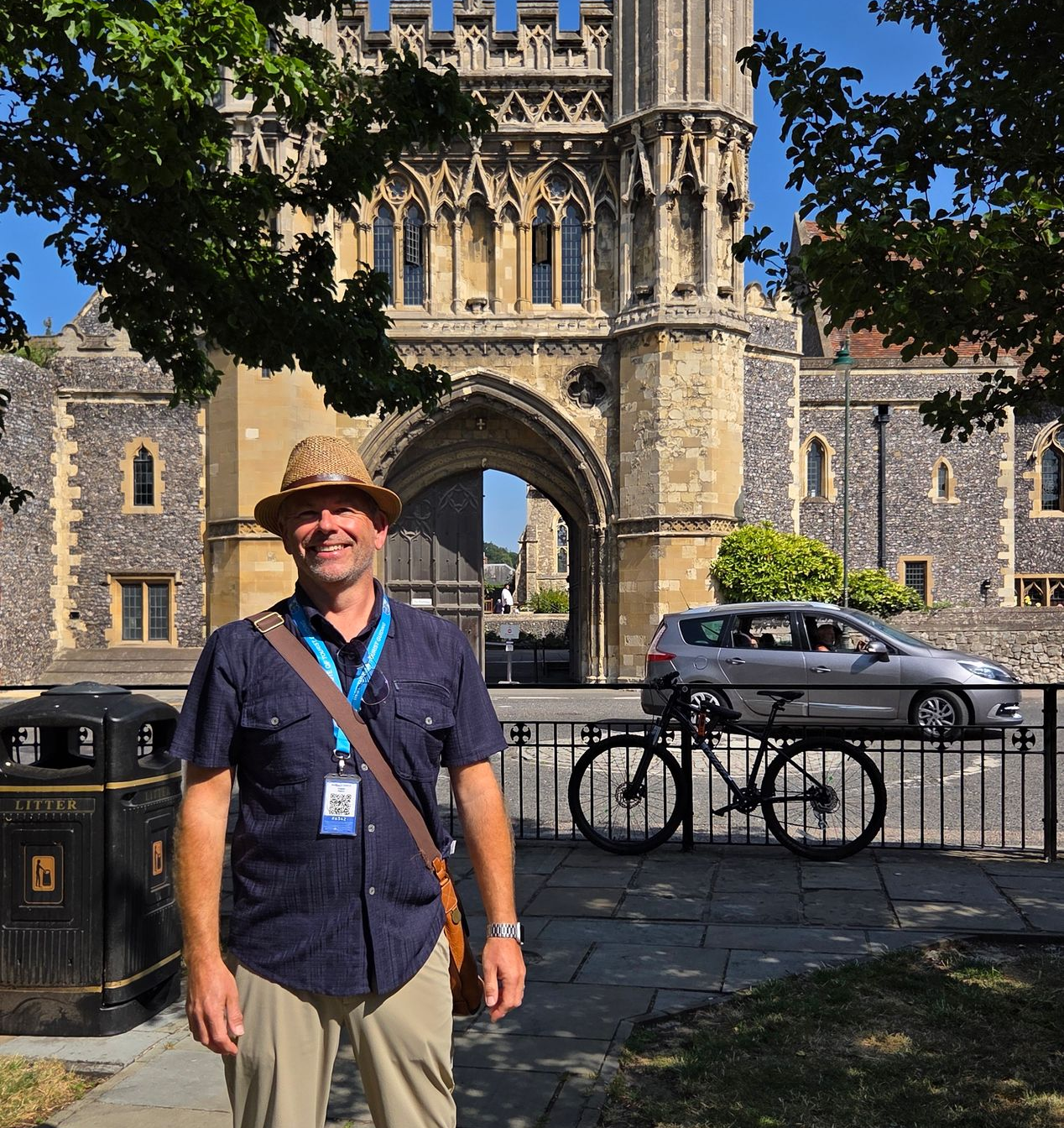
For centuries, people have travelled to Canterbury in search of stories. Medieval pilgrims came to visit the shrine of St Thomas Becket. Chaucer's pilgrims made the city famous through The Canterbury Tales. Today, visitors arrive from across the world to explore its cathedral, medieval streets and historic buildings…but there is another Canterbury waiting to be discovered.
It is the Canterbury of the small details: the tower that survived when almost everything around it was destroyed, the name of a modern shopping area that reaches back to medieval religious history, the birthplace of one of England's most famous playwrights, and paintings and buildings that can tell surprising stories if you know what to look for.
These are some of the places and stories that make Canterbury such a fascinating city to explore, and why sometimes the best way to discover a familiar place is to look at it through the eyes of someone who knows its history.
1. Start by looking beyond the obvious
Canterbury Cathedral is, quite rightly, one of the city's great attractions. Yet if you spend your entire visit looking towards the Cathedral, you can miss some of the stories happening around it.
Canterbury's historic centre is packed with layers of history, often sitting directly alongside modern shops, cafés and busy streets.
Take Whitefriars, for example.
Today, it is associated with shopping, restaurants and modern Canterbury, but the name is a reminder of what stood here long before the shopping centre existed.
The area takes its name from the former Austin friars' monastery, whose friars were known as the "white" friars. The monastery was dissolved during the reign of Henry VIII in 1538. The site later passed through different uses before eventually becoming part of the modern city.
So next time you're walking through Whitefriars, look around you and imagine the very different Canterbury that once occupied this part of the city. It's a perfect example of Canterbury's history being hidden in plain sight.
2. The tower that survived the destruction of St George's Church
One of Canterbury's most poignant historic reminders can be found just away from the city's most famous sights.
The tower of St George's Church stands where the church once stood, and it has a particularly fascinating connection to one of Canterbury's most famous sons.
Christopher Marlowe, the Elizabethan playwright and poet, was baptised at St George the Martyr on 26 February 1564. His exact date of birth isn't known, but he was probably born only shortly before his baptism. Marlowe went on to become one of the most important dramatists of Elizabethan England, producing works including Doctor Faustus and Tamburlaine, but the church where he was baptised is no longer there.
St George's was seriously damaged during the Second World War, with the tower surviving the bombing that destroyed much of the church. Today, that tower remains as a physical link between modern Canterbury and the city Marlowe knew.
It is the sort of place you could easily walk past without stopping, but once you know the story, you see it differently.
3. Follow the footsteps of Christopher Marlowe
Marlowe's connection with Canterbury goes further than a baptism record.
He was born in the city in 1564 and grew up here before eventually heading to Cambridge and beginning the remarkable career that would make him one of Elizabethan England's most famous playwrights.
Canterbury has always been a city associated with writers and storytellers, and Marlowe is one of its most intriguing characters. His life was remarkably short and his death in 1593 remains surrounded by questions and speculation.
In 2026, Canterbury is once again exploring his story through exhibitions and events, including The Making of Marlowe: Poet, Playwright, Provocateur at The Beaney.
For visitors interested in literature, theatre or history - and for Kent residents who may have walked these streets countless times - Marlowe offers another way of seeing Canterbury.
This isn't simply the city of Chaucer and pilgrims. It's also the city of Marlowe.
4. Go inside The Beaney, but don't just look at the famous building
The Beaney House of Art & Knowledge is one of Canterbury's most recognisable buildings.
For visitors, it is an easy place to add to a day exploring the city. For locals, it can be tempting to think of it as somewhere you've already seen, but inside are some wonderfully unexpected stories.
One of our favourites is Thomas Sidney Cooper's painting “Separated, but not Divorced”, featuring the wonderfully memorable bull known as Charlie.
Cooper was a Canterbury-born artist who became famous for his paintings of cattle and sheep. The Beaney's collection contains a number of his works, but Charlie the Bull is particularly popular.
When Cooper originally created Separated but not Divorced, he included a crow pecking at bones in the bottom corner. He later removed it, perhaps because the image was considered too ominous.
It is exactly the sort of tiny detail that makes a museum visit more memorable.
5. Stop for a cream tea… and perhaps a ghost story
History in Canterbury isn't confined to museums and monuments. Sometimes you can find it over a cup of tea. Tiny Tim's Tearoom on St Margaret's Street is a great example.
On the surface, it is exactly the sort of place you might hope to find during a visit to Canterbury: traditional tea, cakes, scones and a quintessential English tearoom atmosphere, but there is another side to the building.
Tiny Tim's has become known for stories of ghosts and a darker history associated with the upper floors, making it an especially entertaining stop for anyone who enjoys their cream tea with a side of the supernatural. Visit Canterbury itself describes the tearoom as a favourite with both locals and visitors and highlights the mysterious history of the building.
6. Look for the stories in the city's artwork
One of the best things about exploring Canterbury is that you don't necessarily need to enter a museum to encounter something interesting.
Look around the streets and you will find statues, sculptures, plaques and public artworks that tell stories about the people and events that have shaped the city.
One example is the “Be Welcoming” sculpture by Timothy Schmalz, outside St Thomas of Canterbury Church in Burgate.
It is easy to walk past, but stop for a moment and consider what it represents.
Canterbury has welcomed travellers, pilgrims, artists, students and visitors for centuries. The city's identity has always been connected to people arriving from somewhere else.
That makes a piece of public art like this feel particularly appropriate, and it is another reminder that sometimes you don't need to find a grand historic monument to discover something worth talking about.
7. Step into the world of Chaucer
Of course, you can't explore Canterbury's hidden stories without eventually coming back to the people who made the city famous.
Geoffrey Chaucer's The Canterbury Tales turned the journey to Canterbury into one of the most famous stories in English literature.
Today, visitors can experience those tales in a very different way.
The Canterbury Tales Experience at St Margaret's Street reopened in 2026, bringing Chaucer's pilgrims and stories to life using modern technology, projection, animation and immersive storytelling.
It creates an interesting contrast with the rest of Canterbury. Outside, you can walk along streets that have existed for centuries. Inside, you can experience a medieval journey using some of today's most modern technology.
8. The best way to discover Canterbury? Slow down.
Perhaps the biggest secret to exploring Canterbury isn't a particular attraction at all.
It's taking your time.
Don't simply walk from the Cathedral to the next attraction. Look upwards. Read the plaques. Turn down a side street. Notice the names of roads and buildings. Step inside somewhere you have never visited.
Ask questions.
Why is this street called that?
Who lived here?
What was this building before it became a shop?
Why has that tower survived?
What happened here?
Those questions can turn an ordinary walk through Canterbury into a journey through hundreds, sometimes thousands, of years of history. That is what makes the city so rewarding for both first-time visitors and people who have lived in Kent for years.
Canterbury is a city you can keep rediscovering
One of the great things about Canterbury is that you don't have to be a first-time visitor to experience something new. You might have walked down St George's Street dozens of times without knowing the story of Christopher Marlowe.
You might have shopped at Whitefriars without thinking about the friars who once occupied the site. You might have visited The Beaney without knowing the slightly macabre detail hidden within one of its most famous paintings.
That's the Canterbury we love.
Not just the famous landmarks, but the stories between them, because sometimes the best way to explore a historic city isn't to follow a checklist of attractions. It's to follow your curiosity.
Want to discover more of Canterbury's stories?
Whether you're visiting Kent for the first time or you've lived here for years, a guided tour can reveal a very different side of the city.
At Kent Guided Tours, we love sharing the stories, characters and hidden details that can be easy to miss when you're exploring on your own.
So next time you're in Canterbury, don't just look at the city.
Look closer. You never know what story you'll find.